Electrical faults can start with a small inconvenience, such as a flickering light or a tripping circuit, but they should never be ignored. For homeowners, landlords and businesses in Finchley, a careful diagnosis is the safest way to understand what is happening behind the socket, switch, consumer unit or cable route. Working with Solution Electric helps you get a professional view of the fault before it becomes a larger disruption.
This guide explains what trusted electrical fault diagnosis involves, why repeated electrical problems need proper testing, and when to call a qualified electrician. It is written for domestic and light commercial properties in Finchley, including flats, family homes, rental properties, offices, shops and managed buildings.
A proper fault-finding visit is not guesswork. It is a structured process that looks at symptoms, isolates the affected circuit, tests likely causes and confirms a safe repair route. The aim is not only to restore power, but to reduce the chance of the same issue returning.
Electrical Fault Diagnosis Infographic
This visual guide summarises the most common warning signs, likely causes, diagnosis steps and prevention tips for electrical faults in Finchley properties.
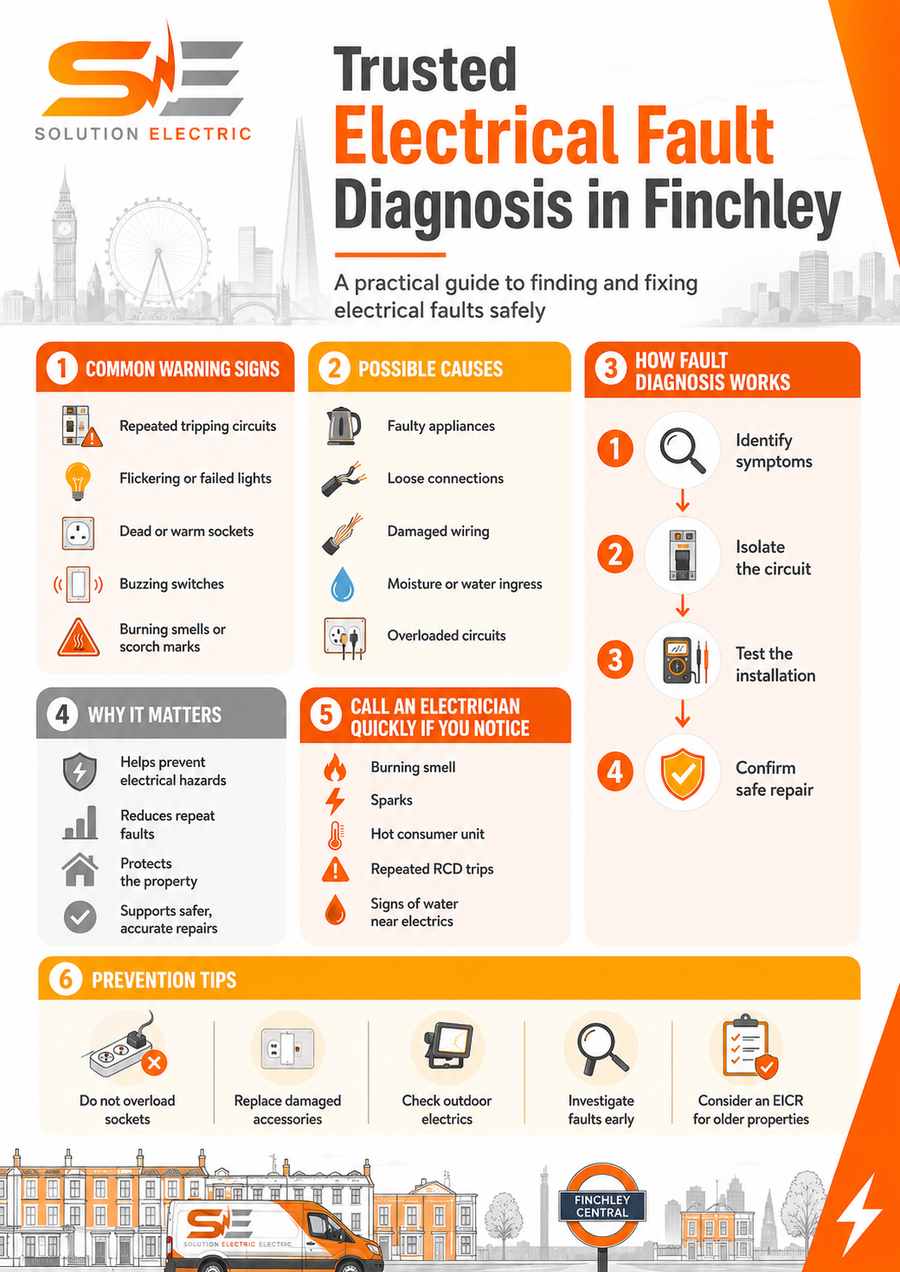
Click the infographic to view it larger
What Electrical Fault Diagnosis Means
Electrical fault diagnosis is the process of identifying the reason an electrical system is not working correctly. It may involve checking a single socket, a lighting circuit, a consumer unit, an appliance connection, an RCD, a circuit breaker or a larger wiring issue. The goal is to find the root cause rather than simply resetting a switch and hoping the problem disappears.
In many cases, the visible symptom is only part of the story. A circuit may keep tripping because of moisture, damaged insulation, overloaded equipment, a faulty accessory, loose connections or a problem with an appliance. Without testing, it is difficult to know which one is responsible.
Professional Electrical Fault Diagnosis uses electrical knowledge, test equipment and a logical method. This helps avoid unnecessary disruption and reduces the risk of replacing parts that are not actually causing the fault.
- Identifies the cause of tripping circuits
- Checks sockets, switches and lighting faults
- Looks for loose, damaged or unsafe connections
- Helps separate appliance faults from wiring faults
- Supports safer repair decisions
- Reduces repeated call-outs for the same problem
Common Electrical Faults in Finchley Properties
Finchley has a wide range of properties, from older houses and converted flats to modern apartments, extensions, shops and small offices. Because of this mix, electrical faults can come from different causes. Older wiring may struggle with modern demand, while newer installations can still develop problems if accessories, appliances or circuits are damaged.
One of the most common reasons people request fault finding is a circuit that keeps tripping. This may happen when a specific appliance is switched on, when lights are used, when a socket circuit is loaded, or without any obvious pattern. A recurring trip should be investigated because it usually means the protective device is reacting to something abnormal.
Lighting faults are also common. Flickering lights, lights that fail in one room, dimming when appliances start, or buzzing switches can all suggest an issue that needs checking. In some cases the problem is simple, but in others it may point to loose connections, worn fittings or a circuit fault.
- RCD or circuit breaker tripping repeatedly
- Flickering, dimming or failed lights
- Sockets not working in one area
- Burning smell near switches or outlets
- Buzzing sounds from accessories
- Outdoor electrics affected by water ingress
Warning Signs You Should Not Ignore
Electrical faults often provide warning signs before a complete failure. If you notice heat, marks, smells, buzzing or regular tripping, it is important to treat the issue seriously. These signs can indicate stress within the circuit, poor connections, damaged parts or unsafe use of equipment.
A burning smell near a socket, switch, consumer unit or light fitting should be acted on quickly. The same applies to scorch marks, melted plastic, crackling sounds or a socket that feels warm. These are not normal conditions and should not be covered up or left for later.
Frequent resetting is another common mistake. If an RCD or breaker trips repeatedly, resetting it again and again does not solve the cause. The protective device may be doing its job by disconnecting the supply. A proper inspection helps determine whether the issue is with the installation, appliance, cable, accessory or external factor such as moisture.
| Warning Sign |
Possible Meaning |
Recommended Action |
| Repeated tripping |
Possible earth fault, overload, appliance issue or damaged circuit |
Stop repeated resetting and arrange fault diagnosis |
| Burning smell |
Possible overheating, loose connection or damaged accessory |
Stop using the affected point and call an electrician |
| Flickering lights |
Loose connection, poor fitting, circuit issue or supply fluctuation |
Have the lighting circuit checked professionally |
| Warm socket or switch |
Possible overload, poor termination or failing accessory |
Disconnect equipment and arrange inspection |
| Buzzing or crackling |
Possible loose connection or internal damage |
Avoid using the accessory until checked |
Electrical problems can escalate quickly when they involve heat, arcing or damaged insulation. Early diagnosis is usually safer and more cost-effective than waiting until a circuit fails completely.
Why Professional Testing Matters
Electrical systems are designed with protective devices, circuit separation and safe wiring methods. When a fault appears, testing is needed to understand which part of the system is affected. Visual checks alone are not enough for many faults because the problem may be hidden behind fittings, inside accessories or within cable routes.
A qualified electrician can use appropriate test equipment to check continuity, insulation resistance, polarity, earth fault loop impedance and other relevant readings depending on the situation. These tests help identify whether the fault is active, intermittent or linked to a specific part of the installation.
Professional testing also helps avoid unsafe DIY attempts. Guessing, changing parts without understanding the circuit, or bypassing protective devices can create serious danger. If a fault keeps returning, it needs a proper investigation rather than a temporary fix.
- Confirms whether the fault is on wiring or equipment
- Finds hidden problems not visible from outside
- Helps prevent unsafe temporary fixes
- Protects other parts of the installation
- Supports accurate repair recommendations
- Gives homeowners clearer information about risk
How the Fault Diagnosis Process Usually Works
A reliable fault-finding visit starts with understanding the symptoms. The electrician may ask when the issue began, whether it happens with a specific appliance, whether any recent work has been carried out, and whether the fault is constant or intermittent. These details help narrow down the investigation.
The next step is usually to identify the affected circuit. For example, the fault may relate to kitchen sockets, upstairs lighting, outdoor supplies, an immersion heater, an oven circuit or a consumer unit device. Once the area is narrowed down, the electrician can test sections of the circuit and isolate likely causes.
Good diagnosis is methodical. The electrician should not simply replace items at random. They should test, compare results, inspect relevant parts and explain what has been found. If the fault is caused by an appliance, water ingress or damaged accessory, the next step may be different from a wiring defect inside the installation.
Typical Steps in Electrical Fault Finding
- Discuss symptoms and recent changes
- Check the consumer unit and protective devices
- Identify the affected circuit or area
- Inspect sockets, switches, lights or equipment
- Carry out relevant electrical tests
- Recommend safe repair or further investigation
For Finchley homes and businesses, Expert Electrical Fault Finding is especially useful where the problem is repeated, hidden or affecting daily use of the property.
Electrical Fault Diagnosis for Homes, Landlords and Businesses
Different properties need different fault-finding priorities. In a home, the main concern may be keeping the household safe and restoring power to essential areas. In a rented property, the landlord may also need clear records, repair evidence and a safe outcome for tenants. In a business, downtime, staff safety and customer areas can make a fast diagnosis even more important.
Landlords should take tenant reports seriously, especially when they involve tripping, burning smells, damaged sockets or loss of power. A fault that affects everyday use of the property can create inconvenience and safety concerns. Where wider electrical condition is uncertain, an EICR or further inspection may be recommended.
Small businesses in Finchley, such as shops, offices, salons and hospitality spaces, also rely on safe electrical systems. A fault can affect tills, lighting, refrigeration, security systems, IT equipment or customer areas. Professional diagnosis helps identify the problem without unnecessary disruption to the rest of the premises.
- Domestic fault finding for homes and flats
- Support for landlords and managed properties
- Electrical checks for shops and small offices
- Investigation of lighting and socket failures
- Testing for repeated RCD or breaker trips
- Clear explanation of repair options
Electrical Fault Diagnosis vs Simple Electrical Repair
A simple repair is possible when the cause is clear, visible and safe to correct. For example, a damaged switch faceplate or a broken light fitting may be replaced if testing confirms the wider circuit is safe. Fault diagnosis is different because the cause is not always obvious.
If a circuit trips with no clear pattern, if several sockets fail at once, or if accessories show heat damage, the electrician needs to investigate before repairing. This prevents the wrong part being replaced and helps identify whether a deeper issue exists.
Diagnosis should come before repair when the symptom could have more than one cause. This is common with intermittent faults, water-affected outdoor circuits, old wiring, overloaded sockets and appliances that only fail under certain conditions.
| Situation |
Likely Service Needed |
Why |
| One cracked socket faceplate |
Repair or replacement after safety check |
The visible part may be damaged, but connections still need checking |
| Whole socket circuit trips |
Fault diagnosis |
The cause could be wiring, appliance, moisture or overload |
| Lights flicker in several rooms |
Fault diagnosis |
The issue may be wider than one fitting |
| Outdoor socket trips after rain |
Fault diagnosis and inspection |
Water ingress may be affecting the circuit |
| Burning smell near consumer unit |
Urgent electrical inspection |
Heat or loose connections may be present |
Preventing Repeat Electrical Problems
Once the cause of a fault has been found, the repair should address the reason it happened. Replacing a damaged accessory may solve the symptom, but if the cause was overload, moisture, poor installation or old wiring, further recommendations may be needed.
Prevention can include upgrading damaged accessories, improving outdoor weather protection, reducing overloaded extension leads, separating circuits correctly, repairing poor connections or arranging a wider inspection where the installation is old or has been altered many times.
Homeowners can also help by noticing patterns. Does the fault happen when it rains? Does it only happen when the washing machine, oven or heater is used? Does it affect one room or the whole property? These details can help the electrician diagnose the issue faster.
- Avoid overloading sockets and extension leads
- Repair damaged switches and outlets promptly
- Keep outdoor electrics weather-protected
- Do not ignore repeated tripping
- Arrange checks after poor DIY or unverified work
- Consider an EICR for older or rented properties
When an Electrical Fault May Be an Emergency
Not every electrical fault is an emergency, but some symptoms need urgent attention. A burning smell, smoke, sparks, visible damage, exposed wiring, electric shock, water near electrics or a consumer unit that appears hot should be treated seriously. In these situations, safety comes first.
If it is safe to do so, switch off the affected circuit or main supply and avoid touching damaged equipment. Do not continue using a socket, switch or appliance that appears unsafe. If there is fire, smoke or immediate danger, contact the emergency services first.
After the immediate risk is controlled, an electrician can inspect the fault and advise what needs to be repaired before the circuit is used again. Urgent diagnosis helps prevent repeated energising of an unsafe circuit.
- Burning smell or visible scorching
- Sparks from sockets, switches or fittings
- Electric shock from an appliance or accessory
- Water leaks near electrical points
- Repeated tripping that will not reset safely
- Loss of power affecting essential areas
Choosing a Trusted Electrician in Finchley
When choosing an electrician for fault diagnosis, look for a professional approach rather than a quick guess. A trusted electrician should listen to the symptoms, inspect the affected area, carry out suitable tests and explain the findings in clear language. You should understand what caused the fault, what repair is recommended and whether any further safety checks are needed.
For local homeowners, landlords and businesses, choosing Expert Electrical Services in Finchley can make the process easier because the electrician understands the types of properties and common electrical issues found in the area.
It is also important to keep records of any electrical work, especially for rental properties, managed buildings and business premises. Clear records help with future maintenance and can show what was inspected or repaired.
Whether you are dealing with tripping circuits, faulty sockets, lighting issues, outdoor electrical faults or unexplained power loss, trusted diagnosis gives you a safer route forward. For reliable electrical support across Finchley and London, contact Solution Electric and arrange a professional inspection before the fault becomes a bigger problem.
Need Electrical Fault Diagnosis in Finchley?
Solution Electric provides professional electrical fault finding, testing and repair support for homes, landlords and businesses in Finchley and across London.
Get the cause identified properly, repair the issue safely and reduce the chance of the same fault returning.
Book Electrical Fault Finding