Professional Electricians for Fault Finding in Finchley
Electrical problems can be stressful, especially when a circuit keeps tripping, sockets stop working, lights flicker or there is a burning smell near a switch or consumer unit. For homeowners, landlords and local businesses, professional Electrical Fault Diagnosis is the safest way to find the cause of the issue without guessing, replacing random parts or taking unnecessary risks.
In Finchley and across North London, many electrical faults are hidden behind walls, inside accessories, within older wiring or at the consumer unit. A visible symptom is often only the result of a deeper problem. For example, a tripping RCD may be caused by water ingress, damaged cabling, faulty appliances, overloaded circuits or deteriorated insulation.
This guide explains how professional electricians approach fault finding, which warning signs should not be ignored, and why timely diagnosis can protect your property, reduce disruption and help prevent more serious electrical hazards.
Fault Finding Infographic for Finchley Properties
This visual guide highlights the warning signs, possible causes and professional diagnosis process for common electrical faults in homes and businesses.
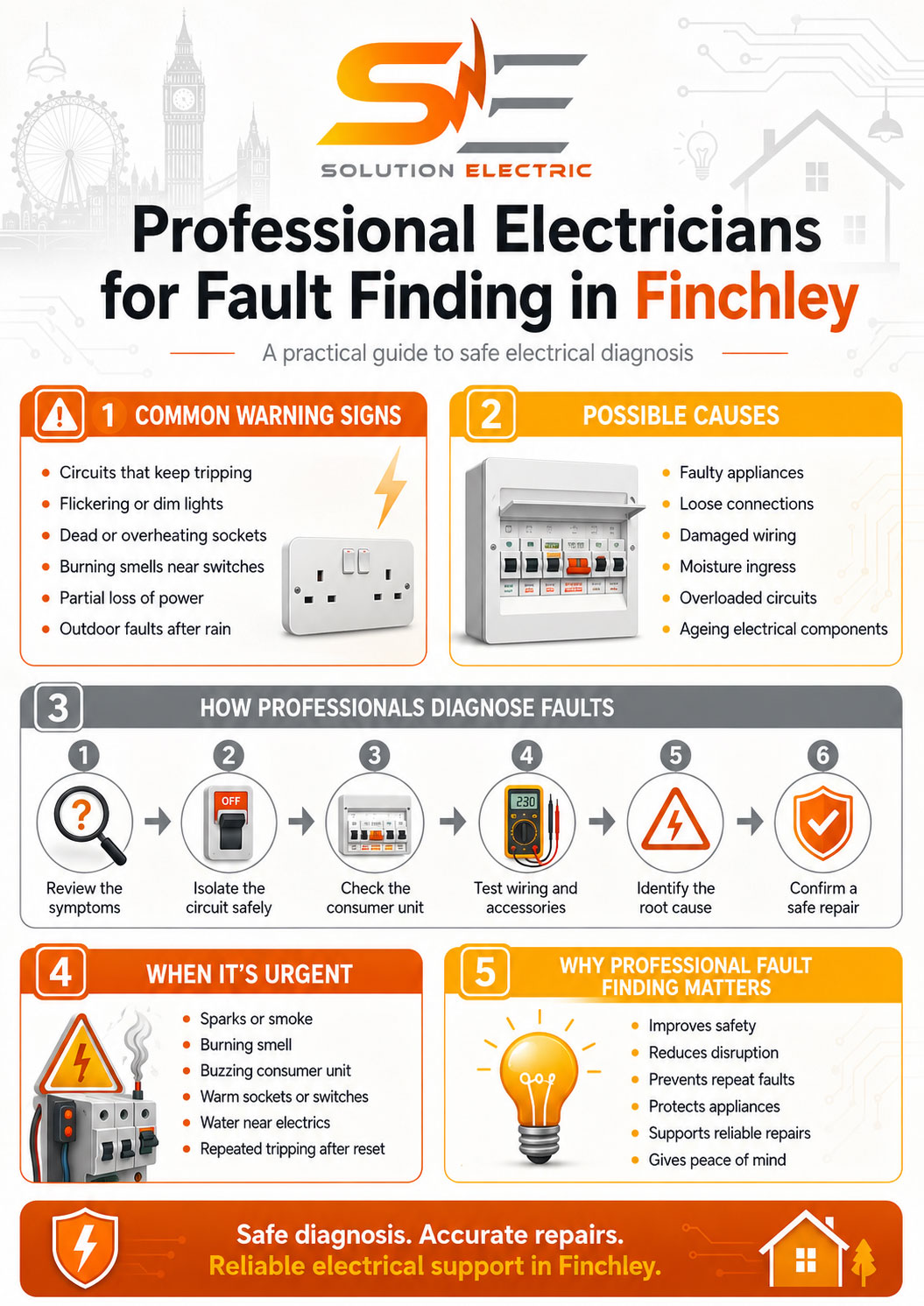 Click the infographic to enlarge
Why Electrical Fault Finding Matters
Electrical fault finding is not simply about getting the power back on. It is about identifying why a problem has happened, checking whether the installation is safe and making sure the same issue does not return. A fault may appear minor at first, but it can sometimes indicate damaged wiring, overheating, loose connections or insulation failure.
Professional electricians use a structured process to test circuits, isolate the affected area and confirm the root cause. This avoids guesswork and reduces the risk of unnecessary repairs. Without proper diagnosis, a property owner may replace sockets, switches or appliances only to find that the fault is still present.
In older Finchley properties, electrical systems may have been altered several times over the years. Extensions, loft conversions, kitchen refurbishments and partial rewires can all create mixed wiring conditions. A careful inspection helps determine whether the problem is localised or part of a wider issue.
- Finds the real cause of tripping circuits
- Helps identify unsafe connections
- Reduces unnecessary replacement work
- Supports safer long-term repairs
- Protects appliances and electrical equipment
- Improves confidence in the installation
Common Electrical Faults in Finchley Homes
Domestic electrical faults can appear in many ways. Some are obvious, such as a socket that does not work. Others are intermittent, which makes them harder to trace. A circuit may trip once every few days, lights may flicker only when certain appliances are used, or a burning smell may come and go.
Common issues include faulty sockets, damaged light fittings, overloaded circuits, loose terminals, old accessories, damaged external wiring, moisture in outdoor lights and appliance-related faults. In some homes, the problem may be linked to ageing wiring or an outdated consumer unit that no longer supports the way the property is used.
Bathrooms, kitchens, gardens and utility areas are often more vulnerable because moisture, heat and heavy appliance use can place extra strain on the electrical installation. This is why a professional electrician will consider both the visible symptom and the environment around the fault.
- RCD or RCBO repeatedly tripping
- Lights flickering or dimming unexpectedly
- Sockets overheating or becoming discoloured
- Burning smells near switches or fittings
- Outdoor lights failing after rain
- Partial loss of power in one area
Signs You Need a Professional Electrician
Some electrical warning signs should never be ignored. If a circuit breaker trips once and resets normally, it may be linked to a temporary overload or an appliance issue. However, repeated tripping, heat, sparks, buzzing noises or burning smells require professional attention.
You should also call an electrician if only part of the property has power, if a light fitting fails after a bulb change, if an appliance causes the power to trip, or if a socket feels loose, cracked or warm. These symptoms may point to poor connections, damaged accessories or a fault within the wiring.
Electrical faults can become more dangerous when they are left unresolved. Heat can build up at loose terminals, moisture can worsen insulation damage and repeated resetting of a breaker can hide an underlying issue. A professional electrician can test the circuit properly and advise on the safest repair.
- Do not ignore repeat tripping
- Take burning smells seriously
- Avoid using warm or damaged sockets
- Switch off affected circuits if unsafe
- Do not keep resetting breakers repeatedly
- Arrange professional testing as soon as possible
How Electricians Diagnose Electrical Faults
Professional fault finding follows a logical process. The electrician will first listen to the history of the issue, including when it started, which areas are affected and whether any recent work, appliance installation or water leak may be connected. This information helps narrow down the possible causes.
The next stage may involve visual inspection, safe isolation, testing at the consumer unit, circuit testing and checking individual accessories. Depending on the situation, the electrician may test insulation resistance, continuity, polarity, earth fault loop impedance and RCD operation. These tests help confirm whether the circuit is safe and where the fault may be located.
For intermittent faults, diagnosis can take longer because the issue may not appear immediately. A professional electrician may isolate sections of the circuit, test appliances separately and check whether moisture, heat or load changes trigger the fault.
- Reviewing the fault history
- Checking the consumer unit
- Testing affected circuits safely
- Inspecting sockets, switches and fittings
- Separating appliance faults from wiring faults
- Confirming the repair before restoring normal use
Fault Finding for Landlords and Businesses
Electrical faults can cause serious disruption for landlords, tenants and businesses. A tripping circuit in a rental property can affect heating controls, kitchen appliances, lighting or internet equipment. In a shop, office or commercial unit, even a small electrical fault can interrupt daily operations and create safety concerns.
For landlords, prompt diagnosis helps protect tenants and maintain the property. It can also support better record keeping when an issue has been investigated professionally. For businesses, fault finding helps reduce downtime and ensures that staff and customers are not exposed to unnecessary electrical risks.
Commercial and rental properties may also have more complex electrical systems than a typical home. Emergency lighting, distribution boards, office circuits, kitchen equipment, security systems and outdoor lighting may all need to be considered during diagnosis.
- Supports tenant safety and comfort
- Reduces disruption to business operations
- Helps identify repeated circuit problems
- Checks whether appliances are causing faults
- Improves confidence before further repairs
- Creates a clearer repair plan for property owners
Why DIY Electrical Fault Finding Is Risky
It can be tempting to investigate an electrical fault yourself, especially if the issue appears simple. However, electrical systems can be dangerous when tested without the correct equipment, training and safe isolation procedure. Removing accessories, guessing at wiring problems or repeatedly resetting a breaker can increase the risk of shock, fire or further damage.
DIY fault finding is also unreliable because symptoms can be misleading. A socket may appear to be the problem, but the fault may be elsewhere on the circuit. A tripping RCD may be blamed on the consumer unit, when the true cause is an outdoor cable, faulty appliance or damaged insulation.
Professional electricians are trained to test methodically and safely. They understand how to isolate circuits, interpret test results and identify whether a repair is suitable or whether further investigation is needed. This is particularly important in older properties or installations that have been modified over time.
- Avoid removing covers from live accessories
- Do not guess which cable is faulty
- Never ignore signs of overheating
- Do not use damaged sockets or switches
- Avoid repeated breaker resets
- Use a qualified electrician for proper testing
Typical Fault Symptoms and Possible Causes
Electrical faults often have more than one possible cause. This is why professional diagnosis is so important. The table below gives general examples of common symptoms and what may be investigated during fault finding. It should not be used as a substitute for professional testing.
| Fault Symptom |
Possible Cause |
Professional Check |
| RCD keeps tripping |
Appliance fault, moisture, damaged cable or insulation issue |
Circuit testing, appliance isolation and insulation resistance testing |
| Lights flicker |
Loose connection, faulty fitting, overloaded circuit or supply issue |
Inspection of fittings, switches, circuit connections and load conditions |
| Socket feels warm |
Loose terminal, damaged accessory or excessive load |
Safe isolation, accessory inspection and load review |
| Power lost in one room |
Tripped breaker, damaged circuit, loose connection or faulty accessory |
Consumer unit check and circuit continuity testing |
| Outdoor lights fail after rain |
Water ingress, damaged seals or external cable damage |
Inspection of outdoor fittings, junctions and cable routes |
Because these symptoms can overlap, a professional electrician will not rely on appearance alone. Testing helps confirm the safest and most accurate repair route.
When the Problem Is an Electrical Emergency
Some faults need urgent attention. A burning smell, visible sparks, smoke, buzzing from the consumer unit, exposed wiring, repeated tripping after reset or signs of heat damage should be treated seriously. If you believe there is immediate danger, switch off the affected circuit if it is safe to do so and seek professional help.
Water and electricity are a particularly serious combination. If a leak has affected lights, sockets, appliances or the consumer unit, the installation should not be used until it has been checked. Damp outdoor electrics can also create faults that return after rain or cold weather.
Emergency fault finding is focused on making the situation safe first. Once the immediate risk is controlled, the electrician can investigate the cause and explain whether a repair, replacement accessory, circuit repair or further remedial work is needed.
- Burning smell near electrics
- Sparks from sockets or switches
- Smoke or heat marks
- Water near electrical points
- Consumer unit buzzing or overheating
- Repeated tripping after reset
Preventing Repeat Electrical Faults
Once a fault has been repaired, it is worth considering why it happened and whether anything can be done to reduce the chance of it returning. In some cases, a single accessory may be replaced and the circuit may test correctly. In other cases, the electrician may recommend further improvements if the installation is old, overloaded or showing signs of deterioration.
Preventive steps may include replacing damaged sockets, upgrading outdoor fittings, improving cable protection, reducing overloaded extension lead use, repairing water ingress or reviewing the consumer unit. For older homes, periodic inspection may also help identify issues before they become urgent.
Good electrical maintenance is especially important in properties with heavy appliance use, home offices, garden buildings, rental accommodation or previous DIY electrical work. A professional approach helps keep the installation safer and more reliable.
- Replace damaged or worn accessories
- Check outdoor electrics for water ingress
- Avoid overloaded extension leads
- Investigate repeat tripping early
- Review older wiring when faults recur
- Arrange testing after unexplained electrical issues
Choosing a Local Finchley Electrician for Fault Finding
Choosing a local electrician matters when you need fast, practical support. A Finchley-based electrical service understands the local property mix, from period houses and converted flats to modern apartments, rental properties and commercial units. This local experience can help with quicker diagnosis and more relevant repair advice.
Look for an electrician who explains the process clearly, uses proper test equipment and focuses on finding the cause rather than simply resetting a breaker or replacing parts without evidence. Good fault finding should give you a clear explanation of the issue, the repair options and any safety concerns found during testing.
Whether you are dealing with a tripping consumer unit, faulty sockets, lighting faults, damaged outdoor electrics or intermittent power loss, Solution Electric provides Expert Electrical Services in Finchley with professional support for safe diagnosis, repair planning and reliable electrical fault finding across homes, rental properties and local businesses.
Need Electrical Fault Finding in Finchley?
Solution Electric helps homeowners, landlords and businesses diagnose electrical faults safely, from tripping circuits and faulty sockets to lighting issues, consumer unit problems and urgent electrical concerns.
Book professional electrical fault finding with a local Finchley electrician.