Electrical safety mistakes are more common than many property owners realise, especially in older homes, rental properties and busy family houses where small issues are ignored until they become serious. For homeowners and landlords looking for dependable Electrical Services in Barnet, understanding the most common mistakes is an important step towards preventing fire risks, shock hazards, power failures and avoidable repair costs.
Many electrical problems do not appear suddenly. They often build up over time through overloaded sockets, ageing wiring, damaged accessories, poor DIY work, missed inspections or outdated consumer units. A light that flickers occasionally, a socket that feels warm, a circuit that trips now and again or a cable hidden under a rug may seem minor, but these details can point to a wider safety issue.
This guide explains the electrical safety mistakes property owners commonly make, why they matter and how professional inspection, maintenance and certification can help keep homes and rented properties safer.
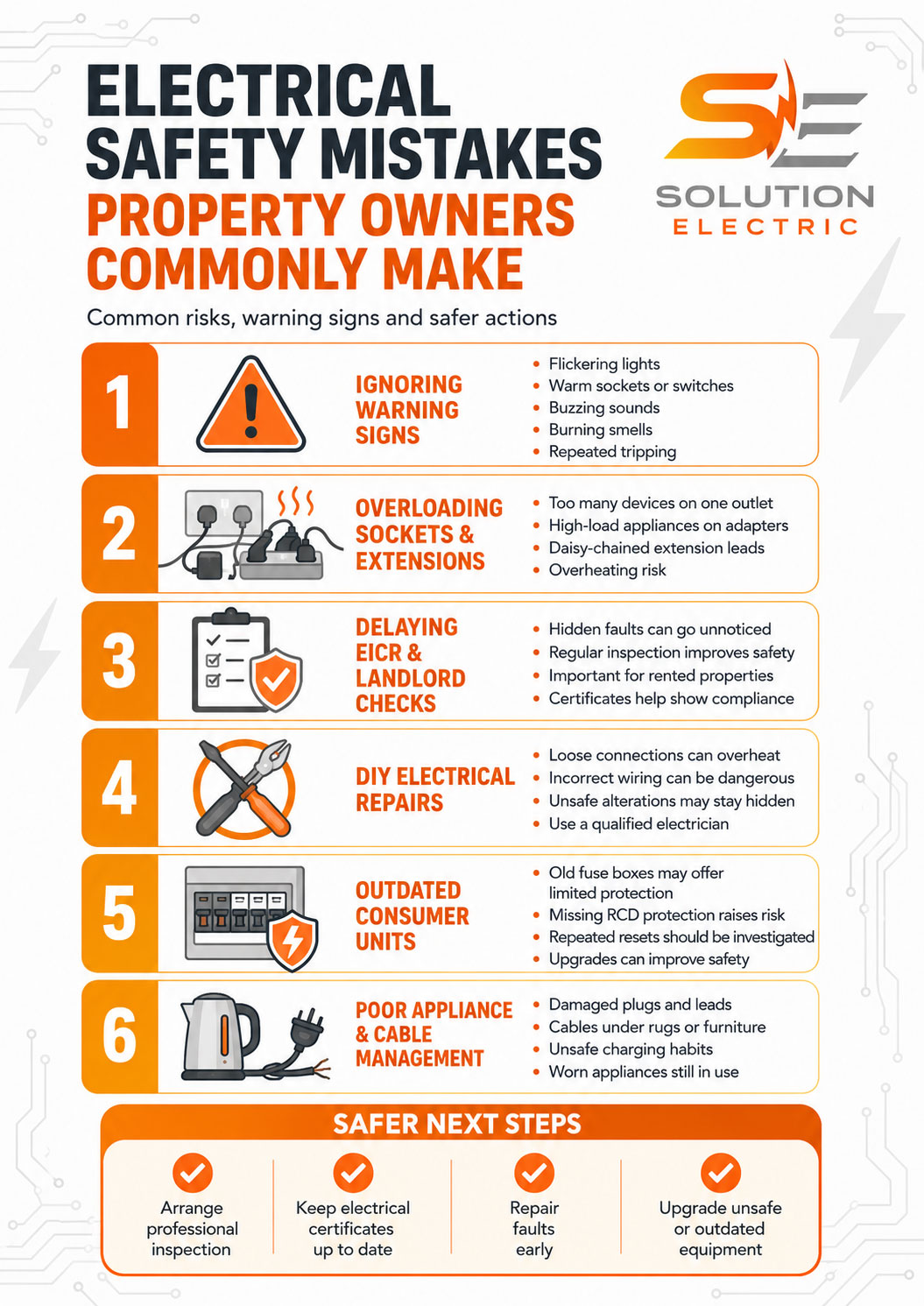
Electrical Safety Mistakes Infographic
This visual guide summarises the most common electrical safety mistakes property owners make, including warning signs, overloaded sockets, DIY repairs, outdated consumer units and safer next steps.
Ignoring Small Electrical Warning Signs
One of the most common mistakes property owners make is ignoring early warning signs. Electrical faults are not always dramatic at first. A switch may crackle, a socket may feel slightly warm, a light may flicker when an appliance starts, or a circuit may trip only occasionally. Because the property continues to function, these issues are often dismissed as normal.
In reality, small warning signs can indicate loose connections, damaged wiring, overloaded circuits, poor earthing or failing accessories. Heat, arcing and resistance can develop behind sockets, switches or inside a consumer unit long before visible damage appears. Waiting until there is a burning smell, melted plastic or complete power loss can make the problem more dangerous and more expensive to fix.
Property owners should treat repeated electrical symptoms as a reason to investigate. If the same circuit keeps tripping, the same socket feels warm, or lights flicker regularly, it is better to arrange an inspection than to wait for the fault to worsen.
- Flickering lights should not be ignored if they happen repeatedly
- Warm sockets or switches may suggest overheating
- Buzzing or crackling sounds need professional attention
- Burning smells should be treated as urgent
- Repeated tripping may point to a circuit fault
- Visible damage should be checked before continued use
Overloading Sockets and Extension Leads
Modern properties use far more electrical equipment than many older installations were designed to support. Home offices, phone chargers, televisions, heaters, kitchen appliances, gaming equipment, garden tools and smart devices can all place extra demand on the electrical system. A common mistake is using extension leads as a permanent solution instead of installing enough safe socket outlets.
Overloading sockets can increase the risk of overheating, particularly when high-powered appliances are connected through adapters or multi-way extensions. Items such as heaters, kettles, tumble dryers, washing machines, microwaves and ovens should be used carefully because they draw more power than small chargers or lamps.
Another mistake is daisy-chaining extension leads, where one extension lead is plugged into another. This can create excessive load on a single socket and increase the chance of damage or overheating. Extension leads are useful for temporary convenience, but they should not replace properly planned electrical points.
- Avoid plugging high-load appliances into overloaded extensions
- Do not daisy-chain extension leads together
- Check plugs and cables for heat or damage
- Use suitable sockets for kitchen and utility appliances
- Install additional sockets where demand is permanent
- Keep extension leads visible and well ventilated
Delaying EICR Checks and Landlord Certificates
Some property owners only think about electrical testing when selling, renting or renovating a property. This is a mistake because electrical installations deteriorate with age, use, damage, environmental conditions and previous work. A property can look tidy while hidden wiring, protective devices or earthing arrangements require attention.
For landlords, electrical safety certification is especially important. In England, rented properties must have their electrical installations inspected and tested at least every five years by a qualified person, with reports provided as required under the regulations. An Electrical Installation Condition Report, commonly known as an EICR, helps identify whether the installation is satisfactory for continued use or whether remedial work is needed.
For property owners arranging Trusted Landlord Electrical Certification in Barnet, the purpose is not simply to obtain paperwork. The inspection helps identify safety issues that may affect tenants, visitors, the property and the owner’s legal responsibilities.
- An EICR can identify hidden electrical defects
- Landlords should keep certificates and reports organised
- Remedial work should not be delayed after an unsatisfactory report
- Testing helps support tenant safety and compliance
- Electrical checks are useful before new tenancies
- Old reports should not be relied on beyond their valid period
Using DIY Electrical Repairs
DIY electrical work is one of the most serious safety mistakes a property owner can make. While some household tasks may appear simple, electrical systems require proper knowledge, testing and compliance. Replacing accessories without understanding the circuit, extending cables incorrectly, hiding junctions, using the wrong protective device or failing to test work can create hidden hazards.
Poor electrical work may function for a while, but that does not mean it is safe. Loose terminations can overheat. Incorrect cable sizes can become overloaded. Missing earth connections can increase shock risk. Poorly fitted outdoor electrics can allow moisture into the system. Problems may only appear months later when the circuit is under load.
Property owners should also be cautious when buying properties that have had previous DIY alterations. Extra sockets, outbuildings, loft wiring, garden lighting, kitchen changes and bathroom fans should all be inspected if there is uncertainty about how they were installed.
- A working light or socket is not proof of safe installation
- Incorrect cable sizes can create overheating risks
- Loose terminals may cause arcing or heat build-up
- Outdoor electrical work needs correct protection
- Bathroom and kitchen electrics require extra care
- Professional testing confirms whether work is safe
Forgetting About Consumer Unit Safety
The consumer unit is the centre of a property’s electrical protection, yet many owners rarely look at it unless the power goes off. Older fuse boxes, missing RCD protection, poorly labelled circuits, damaged covers or signs of overheating should not be ignored. The consumer unit should be suitable for the property, the circuits and the level of electrical demand.
A modern consumer unit can improve safety by providing better fault protection and clearer circuit separation. Depending on the property, an electrician may recommend RCDs, RCBOs, surge protection or other arrangements. The correct solution should be based on inspection and testing, not guesswork.
Another mistake is repeatedly resetting a tripping circuit without finding the cause. A protective device trips for a reason. It may be reacting to a faulty appliance, damaged cable, moisture, overload or insulation problem. Resetting it again and again without investigation can hide a developing fault.
- Old fuse boxes should be inspected for suitability
- No RCD protection can increase safety risks
- Repeated tripping should be investigated
- Consumer units should be clearly labelled
- Heat marks or damage need urgent attention
- Upgrades should be tested and certified properly
Poor Appliance and Cable Management
Electrical safety is not only about fixed wiring. Appliances, plugs, chargers and cables also need attention. Many property owners continue using damaged cables, cracked plugs, loose sockets or old appliances because they still work. This can be risky, especially when equipment is used daily or left running unattended.
Cables should not be trapped under heavy furniture, run under carpets, stretched across walkways or placed where they can be crushed, overheated or damaged. Chargers should be used with care, especially overnight or near soft furnishings. Kitchen appliances should be connected safely and kept away from water where appropriate.
In rental properties, landlords should also think about appliances they provide. Although the fixed installation is covered by EICR requirements, landlord-supplied appliances should still be safe for tenant use. Regular visual checks and appropriate testing can help reduce risk.
Not Planning Electrics During Renovation Work
Renovation work often reveals another common mistake: leaving electrical planning until the end. Kitchens, bathrooms, extensions, loft conversions, garden rooms and home offices all place different demands on an electrical system. If sockets, lighting, extraction, appliance supplies and circuit requirements are not planned early, the finished space may be inconvenient or unsafe.
Electrical planning should happen before walls are closed, units are fitted or finishes are completed. This allows cables, switches, sockets, lighting points and protective devices to be designed properly. It also helps avoid messy surface wiring, last-minute compromises and unnecessary rework.
For landlords and homeowners, renovation is also a good time to review whether the existing installation is still suitable. Adding modern appliances or extra rooms to an old installation without checking capacity and protection can create long-term safety concerns.
- Plan sockets before furniture and kitchen units are fitted
- Consider appliance loads before choosing circuits
- Include safe lighting for kitchens, bathrooms and outdoor areas
- Check whether the consumer unit needs upgrading
- Review earthing and bonding during major works
- Keep certificates and test records after completion
Common Mistakes and Safer Actions
Electrical safety improves when property owners move from reacting to problems towards preventing them. Small changes in behaviour, regular inspections and professional advice can reduce risk significantly. The table below summarises frequent mistakes and better alternatives.
| Common Mistake |
Possible Risk |
Safer Action |
| Ignoring flickering lights or tripping circuits |
Hidden wiring fault, overload or failing accessory |
Book inspection and testing before the issue worsens |
| Using extension leads permanently |
Overheating, damaged cables or overloaded sockets |
Install suitable additional socket outlets |
| Delaying landlord certification |
Compliance issues and unresolved tenant safety risks |
Arrange EICR testing within the correct timeframe |
| Doing DIY electrical repairs |
Poor connections, shock hazards or fire risk |
Use a qualified electrician for electrical work |
| Resetting a tripping circuit repeatedly |
Fault left unresolved behind the system |
Identify the cause through professional fault finding |
| Not checking appliances and cables |
Damaged plugs, overheating or unsafe equipment |
Carry out visual checks and replace damaged items |
When to Book an Electrician
You should book an electrician if you notice repeated tripping, burning smells, buzzing sounds, hot sockets, damaged accessories, flickering lights, old fuse boxes, exposed wiring or electrical issues after renovation work. It is also sensible to arrange testing when buying a property, preparing a rental home, changing tenants or adding major appliances.
For landlords, Landlord Certificates are part of responsible property management. A professional report can identify whether the electrical installation is satisfactory or whether further investigation and remedial work are needed.
Electrical safety is not just about fixing problems after they happen. It is about protecting people, property and long-term value. By avoiding common mistakes and using professional support when needed, property owners can reduce risk and manage their electrical systems with greater confidence.
If you are a homeowner, landlord or property manager looking for trusted Electrical Services in Barnet, Solution Electric can help with inspections, testing, landlord certificates, fault finding, consumer unit advice and safe electrical upgrades across Barnet and London.
Need Electrical Safety Support in Barnet?
Solution Electric provides professional inspections, landlord certificates, EICR reports, fault finding and electrical services for homeowners, landlords and businesses.
Book a qualified electrician to check your property, reduce safety risks and keep your electrical installation properly maintained.