Electrical Fault Finding in Enfield – Local NICEIC Electricians
Electrical faults can interrupt daily life without warning. A tripping consumer unit, flickering lights, dead sockets, burning smells or sudden loss of power can all point to a hidden issue that needs proper investigation. For homeowners, landlords and businesses, Expert Electrical Fault Finding is the safest way to locate the cause of the problem and arrange the correct repair without relying on guesswork.
Enfield properties vary from older houses and converted flats to modern apartments, shops, offices and rental homes. Each type of property can develop different electrical problems depending on age, wiring condition, appliance use, moisture exposure and previous alterations. A fault may look simple on the surface, but the cause may be hidden inside a circuit, accessory, appliance, outdoor fitting or consumer unit.
This guide explains how local electricians approach electrical fault finding in Enfield, which warning signs should be taken seriously, why professional testing matters and what property owners can do to reduce the risk of repeat electrical faults.
Electrical Fault Finding Infographic for Enfield
This visual guide summarises the most common warning signs, possible causes and safe diagnostic steps used by local electricians when tracing electrical faults.
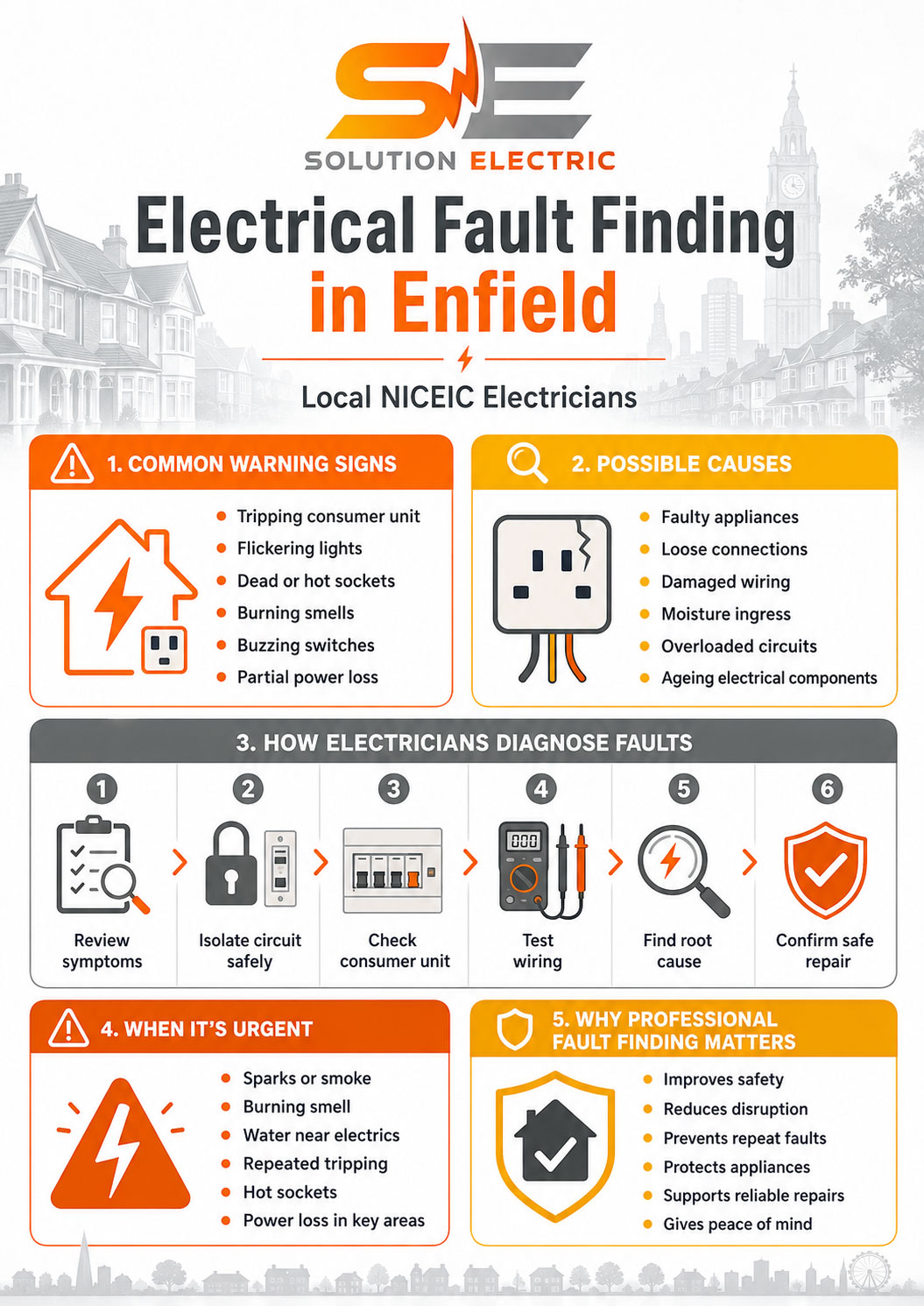 Click the infographic to enlarge
Why Electrical Fault Finding Matters
Electrical fault finding is a structured process used to identify why an electrical problem is happening. It is not only about restoring power. It is about checking whether the installation is safe, locating the source of the fault and recommending the right repair based on evidence.
When a circuit trips, a socket fails or a light fitting stops working, the visible symptom may not be the true cause. For example, a tripping RCD could be linked to a faulty appliance, damaged cable, moisture in an outdoor fitting, loose connection or insulation breakdown. Replacing a socket or resetting the consumer unit may not solve the underlying issue.
Professional diagnosis reduces unnecessary work and helps protect the property. It also gives homeowners, landlords and business owners a clearer understanding of what has gone wrong, what needs repairing and whether the wider installation requires attention.
- Identifies the real cause of electrical faults
- Helps avoid unnecessary replacement work
- Improves safety before circuits are reused
- Reduces the chance of repeat problems
- Protects appliances and electrical equipment
- Supports clear repair planning
Common Electrical Faults in Enfield Properties
Electrical faults can happen in any property, but older homes and heavily used electrical systems are more likely to show recurring symptoms. In Enfield, many properties have been extended, converted or refurbished over time. This can sometimes leave mixed wiring conditions, older accessories, overloaded circuits or poorly planned additions.
Common faults include consumer units that keep tripping, sockets that stop working, lights that flicker, buzzing switches, failed outdoor lighting, appliance-related faults and partial power loss. Some faults are constant and easy to reproduce, while others only appear during wet weather, when a specific appliance is used or when several loads are running at the same time.
Kitchens, bathrooms, gardens, garages and utility rooms often require extra care because moisture, heat and higher appliance use can place more strain on circuits. A professional electrician will assess the symptom, the location and the condition of the installation before deciding how to test.
- RCDs or RCBOs tripping repeatedly
- Faulty or dead sockets
- Flickering or dimming lights
- Burning smells near electrical accessories
- Outdoor lighting faults after rain
- Partial loss of power in one room or area
Signs You Need a Local Electrician
Some electrical symptoms should be checked quickly. A circuit breaker that trips once may be caused by a temporary overload, but repeated tripping suggests there is a fault that needs investigation. Warm sockets, buzzing sounds, sparks, burning smells or discolouration around accessories should never be ignored.
You should also call a local electrician if a specific appliance causes the power to trip, if sockets only work intermittently, if lights fail after bulbs have been changed, or if outdoor electrics stop working after rain. These signs can point to damaged wiring, moisture ingress, poor connections or failing components.
Electrical faults can become more serious if they are left unresolved. Loose connections can overheat, damaged insulation can worsen and repeated resetting can hide a fault instead of fixing it. A prompt visit from an experienced electrician helps reduce risk and disruption.
- Repeated tripping at the consumer unit
- Socket plates that feel hot or loose
- Buzzing switches or light fittings
- Sparks, smoke or burning smells
- Power loss affecting part of the property
- Electrical faults after water leaks or rain
How NICEIC Electricians Diagnose Faults
A professional electrician will start by asking when the fault began, which circuits are affected and whether anything changed before the problem appeared. Recent appliance installation, building work, water leaks, outdoor lighting changes or DIY electrical work can all provide useful clues.
The electrician may then carry out safe isolation, visual inspection and circuit testing. This can include checking the consumer unit, accessories, cable routes, switches, sockets, light fittings, outdoor connections and connected appliances. Testing helps separate appliance faults from wiring faults and confirms whether a circuit is safe to use.
For more complex or intermittent faults, diagnosis can take longer. The electrician may need to isolate sections of a circuit, test accessories one by one, check insulation resistance and review whether moisture, load or movement is triggering the issue. A NICEIC electrician should work methodically and explain the findings clearly before repair work begins.
- Review the history of the electrical fault
- Safely isolate affected circuits
- Inspect the consumer unit and accessories
- Test wiring and connected equipment
- Identify the root cause of the fault
- Confirm the safest repair option
Domestic Electrical Fault Finding in Enfield
Home electrical faults can be inconvenient and worrying. A tripping circuit may affect heating controls, lighting, kitchen appliances, internet equipment or home office devices. In family homes, safe and quick diagnosis is important because the electrical system is used throughout the day.
Domestic fault finding may involve sockets, lighting circuits, cooker supplies, bathroom fans, garden circuits, garage electrics, immersion heaters, underfloor heating controls or consumer unit issues. In some cases, the fault is caused by one appliance. In others, the wiring or accessories need closer inspection.
Older homes may require additional care because wiring may have been altered over many years. Extensions, loft conversions and kitchen upgrades can sometimes leave circuits under strain or with unclear cable routes. A professional electrician can test the affected circuit and advise whether a simple repair is enough or whether further improvement is recommended.
- Socket and lighting faults
- Kitchen and appliance-related problems
- Consumer unit tripping issues
- Garden and outdoor electrical faults
- Heating control electrical issues
- Intermittent faults in older wiring
Commercial and Landlord Electrical Fault Finding
Electrical faults in commercial and rental properties can create disruption, safety concerns and complaints from staff, customers or tenants. A tripping circuit in a shop, office or rental property can affect lighting, equipment, security systems, heating controls and essential appliances.
Landlords need reliable support when tenants report electrical problems. Prompt diagnosis helps protect occupants, reduce repeat callouts and provide a clearer record of what was investigated. For businesses, fast fault finding can reduce downtime and help keep operations running safely.
Commercial and landlord properties may involve more complex systems than a standard home. Distribution boards, emergency lighting, communal areas, external lighting, office circuits and equipment loads may all need to be checked depending on the symptom.
- Fault finding for rental properties
- Shop and office electrical faults
- Communal lighting and access issues
- External lighting and signage circuits
- Business equipment causing circuit trips
- Clear reporting for property owners
Electrical Fault Symptoms and Possible Causes
One electrical symptom can have several possible causes, which is why proper testing is important. The table below shows common examples of what electricians may investigate during fault finding in Enfield homes and businesses.
| Fault Symptom |
Possible Cause |
Professional Check |
| Consumer unit keeps tripping |
Faulty appliance, damaged cable, moisture or insulation issue |
Circuit testing, appliance isolation and insulation resistance testing |
| Lights flicker or dim |
Loose connection, faulty fitting, overloaded circuit or supply issue |
Inspection of fittings, switches, connections and circuit load |
| Socket feels warm |
Loose terminal, damaged socket or excessive load |
Safe isolation, accessory inspection and load assessment |
| Outdoor lights fail after rain |
Water ingress, damaged seals, cable damage or faulty junction box |
External fitting inspection and cable route testing |
| Power lost in one area |
Tripped device, loose connection, damaged circuit or failed accessory |
Consumer unit check, continuity testing and accessory inspection |
This table is only a general guide. The actual cause can only be confirmed through safe inspection and testing by a qualified electrician.
Why DIY Electrical Repairs Are Risky
DIY fault finding can be dangerous. Removing socket covers, opening a consumer unit or guessing which cable is faulty can expose you to electric shock and may make the problem worse. Even when the power appears to be off, safe isolation must be confirmed correctly before any work is carried out.
Another problem with DIY diagnosis is that electrical symptoms can be misleading. A faulty appliance may appear to be a wiring issue. A socket problem may actually be caused by a loose connection elsewhere on the circuit. Moisture in an outdoor fitting may trip an indoor circuit. Without the correct test equipment, the true cause can easily be missed.
Professional electricians use proper testing procedures to identify the fault safely. This protects the property, avoids unnecessary work and helps ensure the repair addresses the real problem rather than only the visible symptom.
- Do not remove live electrical accessories
- Avoid repeated breaker resets
- Never ignore heat, sparks or burning smells
- Do not guess cable or circuit faults
- Keep water away from electrical points
- Use a qualified electrician for safe testing
Preventing Repeat Electrical Faults
After a fault has been repaired, it is worth considering why it happened. Some problems are isolated and can be solved with a single repair. Others may suggest that the installation needs further attention, especially if faults keep returning or several areas of the property are affected.
Preventive measures may include replacing worn accessories, improving outdoor weather protection, reducing overloaded extension lead use, checking older circuits, repairing water ingress and reviewing the consumer unit. In rental or commercial properties, regular checks can also help identify developing issues before they become urgent.
Good electrical maintenance is particularly important where properties have heavy appliance use, garden electrics, home offices, older wiring or previous alterations. A professional approach helps improve reliability and gives property owners more confidence in the installation.
- Replace damaged sockets and switches
- Check outdoor fittings for water ingress
- Avoid overloading extension leads
- Investigate repeat tripping early
- Review ageing wiring when faults recur
- Arrange testing after unexplained faults
Choosing an Enfield Electrician for Fault Finding
When choosing an electrician for fault finding, look for someone who works carefully, explains the process and uses proper test equipment. A good electrician should not simply reset the breaker and leave. They should investigate the cause, explain the findings and recommend a safe repair route.
Local knowledge is also useful. Enfield includes a wide mix of property types, from older family homes to converted flats, rental properties and commercial premises. An electrician who understands these property types can investigate faults more efficiently and provide practical repair advice.
Whether you need Electrical Fault Diagnosis for a tripping circuit, faulty sockets, lighting problems, outdoor electrical faults or urgent power issues, Solution Electric provides Reliable Electrical Services in Enfield for homeowners, landlords and businesses that need safe, professional support.
Need Electrical Fault Finding in Enfield?
Solution Electric helps homeowners, landlords and businesses diagnose electrical faults safely, from tripping circuits and faulty sockets to lighting issues, consumer unit problems and urgent electrical concerns.
Book local electrical fault finding with an Enfield electrician.