Older fuse boxes are still found in many homes and rental properties across Barnet, but age, limited protection and outdated components can increase the risk of overheating, electrical faults and fire. For homeowners, landlords and businesses looking for reliable Electrical Services in Barnet, understanding the warning signs of an old fuse box is an important step towards keeping a property safe and compliant.
A fuse box, or consumer unit, controls and protects the electrical circuits throughout a building. When it is modern, correctly installed and properly tested, it helps disconnect dangerous faults quickly. When it is old, damaged or unsuitable for today’s electrical demand, it may not provide the same level of protection expected in a modern UK property.
This guide explains why older fuse boxes increase fire and electrical safety risks, what signs to look for, and when a professional inspection or upgrade should be considered.
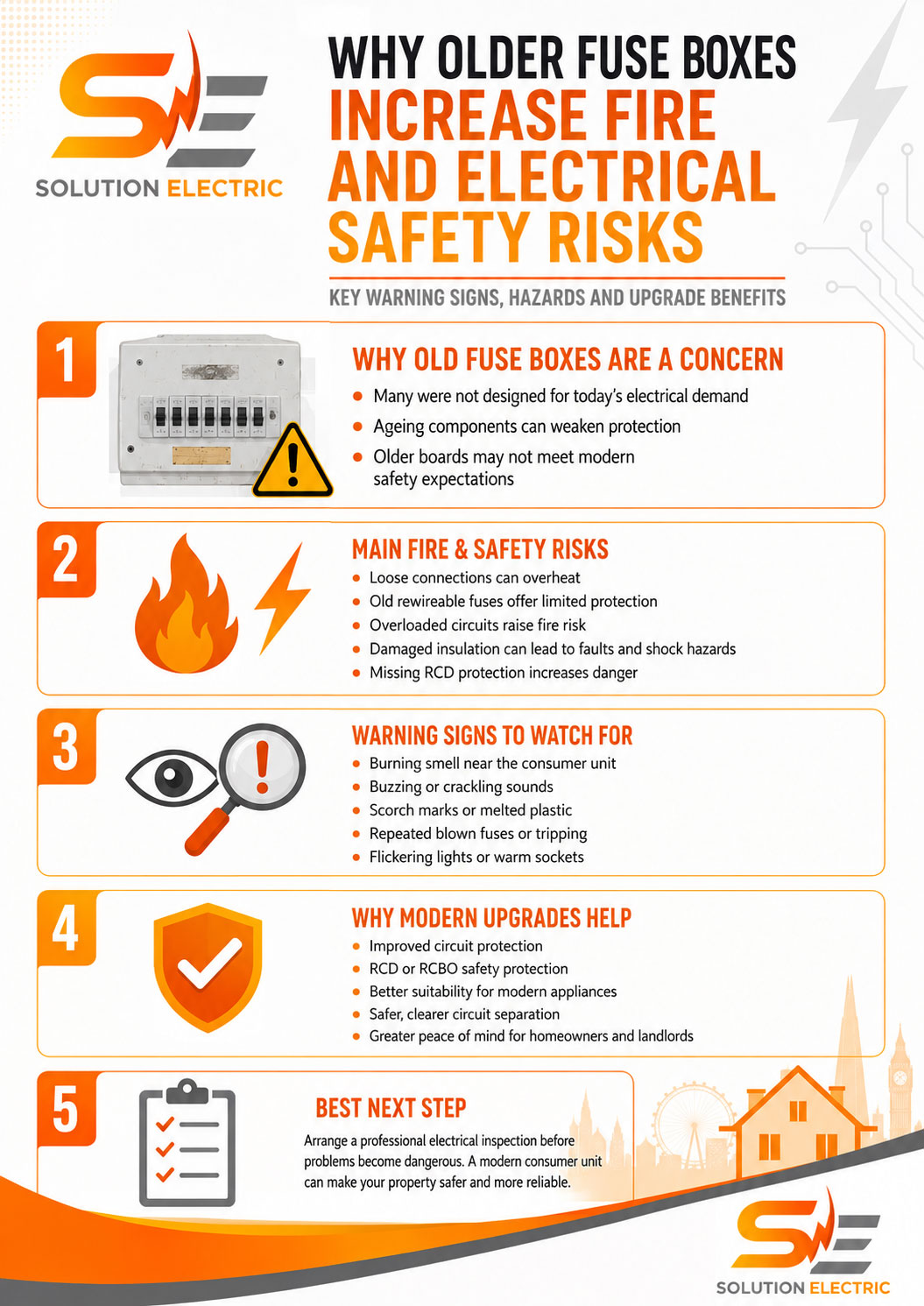
Older Fuse Box Safety Risks Infographic
This quick visual guide highlights the main warning signs, fire risks and safety benefits of upgrading an older fuse box or consumer unit.
Why Older Fuse Boxes Matter
An older fuse box may have been suitable when it was first installed, but electrical usage has changed dramatically. Modern homes now use more appliances, chargers, computers, kitchen equipment, heating controls, lighting systems and smart devices than older installations were designed to handle.
Many older boards rely on rewireable fuses or outdated protective devices. These may still operate in some circumstances, but they do not always provide the same level of fast and sensitive protection as a modern consumer unit. If the board has no RCD protection, limited circuit separation or signs of heat damage, it should be checked by a qualified electrician.
Age alone does not automatically mean a fuse box is unsafe, but it is a strong reason to investigate. The real concern is whether the installation is still suitable for the property, the wiring condition, the load on each circuit and the level of protection available.
- Older components may not match current safety expectations
- Rewireable fuses can be slower and less convenient than modern devices
- Missing RCD protection can increase safety risks
- Loose connections may develop over time
- Modern appliances can place more demand on old circuits
- Hidden faults may only be found during inspection and testing
How Older Fuse Boxes Can Increase Fire Risks
Electrical fires often start when heat builds up where it should not. This can happen because of loose terminals, overloaded circuits, damaged cables, poor connections, worn accessories or old components that are no longer performing properly. An ageing fuse box can become a weak point if it has not been inspected for many years.
Heat damage is especially important. Brown marks, a burning smell, buzzing sounds or melted plastic around a fuse box should never be ignored. These signs may indicate resistance, arcing or overheating. In simple terms, electricity may be meeting resistance at a connection point and producing heat. If left unresolved, that heat can damage insulation and increase the risk of fire.
Older fuse boxes may also have fewer circuits, meaning too much demand may be placed on parts of the installation. A modern home may have electric ovens, showers, washing machines, tumble dryers, heaters, outdoor supplies and home office equipment. If these loads are not properly separated and protected, the installation may become less safe.
| Risk Area |
What Can Happen |
Why It Matters |
| Loose connections |
Heat can build up around terminals |
May increase the risk of burning, arcing or fire |
| Old rewireable fuses |
Protection may be less convenient and less advanced |
Faults may not be managed as effectively as with modern protection |
| Overloaded circuits |
Too much demand may be placed on older wiring |
Can cause overheating and nuisance failures |
| Damaged insulation |
Cables may become brittle, cracked or unsafe |
Increases shock and fire risks |
| No RCD protection |
Earth faults may not disconnect quickly enough |
Can increase danger to people and property |
The Problem with Missing RCD Protection
One of the biggest differences between many older fuse boxes and modern consumer units is RCD protection. An RCD, or Residual Current Device, is designed to switch off the electrical supply quickly when it detects certain types of fault. This can help reduce the risk of electric shock and may also provide protection against some electrical fire risks.
Older fuse boxes often do not include RCDs. Some properties may only have partial protection, while others may have none at all. This is particularly concerning for sockets, bathroom circuits, outdoor equipment, kitchens and areas where people may be more exposed to moisture or touch metal appliances.
A modern consumer unit may include RCDs, RCBOs or other protective arrangements depending on the property and design. The aim is not only to protect cables and equipment, but also to improve personal safety and reduce the chance of dangerous faults going unnoticed.
- RCDs can disconnect power quickly during certain faults
- Older fuse boxes may not protect people in the same way
- Outdoor sockets and bathroom circuits need particular care
- Modern boards can improve circuit separation
- RCBO options can reduce the impact of one faulty circuit
- Professional testing confirms what protection is actually present
Modern Electrical Demand Can Expose Old Fuse Box Weaknesses
Many older electrical installations were not designed for today’s lifestyle. A property that once had simple lighting, a small number of sockets and basic appliances may now be expected to support high-load kitchen appliances, multiple computers, smart home devices, EV charging preparation, garden power, security systems and entertainment equipment.
This extra demand does not always mean the fuse box will fail immediately, but it can reveal weaknesses. Frequent tripping, overheating, flickering lights or sockets that feel warm may suggest that the installation needs inspection. In some cases, the fuse box is only one part of the issue; wiring, earthing, bonding and circuit design may also need attention.
That is why a safe approach usually begins with assessment, not guesswork. A qualified electrician can inspect the consumer unit, test circuits, check protective devices and advise whether repair, remedial work or replacement is the most suitable option.
Warning Signs That an Older Fuse Box Needs Attention
Some fuse box problems are obvious, while others are hidden until proper testing is carried out. Homeowners should never remove covers or investigate live electrical parts themselves. However, there are visible warning signs that should prompt a professional inspection.
- Burning smell near the fuse box
- Buzzing, crackling or unusual sounds
- Scorch marks, discolouration or melted plastic
- Fuses blowing repeatedly
- Lights flickering when appliances are used
- Sockets, switches or the fuse board feeling warm
- No visible RCD test button
- Old wooden, cast iron or very dated fuse board construction
If any of these signs are present, the safest action is to stop ignoring the issue and book a professional inspection. Electrical faults rarely improve by themselves. Early testing can identify whether the risk is minor, urgent or part of a wider installation problem.
Landlords, Tenants and Electrical Safety Responsibilities
Electrical safety is especially important in rented homes. Landlords in England are required to have electrical installations inspected and tested at set intervals by a qualified person, with reports provided as required. An old fuse box does not automatically fail an inspection simply because it is old, but it may lead to observations or remedial recommendations if it lacks adequate protection or shows defects.
For landlords in Barnet, a fuse box upgrade may be part of a wider plan to improve safety, reduce tenant complaints and support compliance. If an Electrical Installation Condition Report identifies issues such as damaged equipment, inadequate protection, unsafe connections or poor earthing, remedial work should be addressed properly.
For tenants, warning signs should be reported quickly. Burning smells, repeated power loss, visible damage or overheating should not be treated as normal household inconvenience.
Why Inspection Should Come Before Replacement
Replacing an old fuse box is often a sensible improvement, but the existing electrical installation should be assessed first. A new consumer unit connected to damaged or faulty circuits may immediately reveal problems. This is not a bad thing, but it does mean the process should be planned carefully.
During inspection and testing, an electrician can check the condition of circuits, earthing, bonding, protective devices, cable insulation and overall safety. If faults are found, they can be corrected before or during the consumer unit upgrade. This helps ensure the final installation is safer and more reliable.
For many properties, the best route is a professional EICR or pre-upgrade assessment. This gives a clearer picture of what is required and helps avoid surprises on the day of installation.
- Testing identifies hidden wiring faults
- Earthing and bonding can be confirmed
- Unsafe circuits can be repaired before reconnection
- The correct consumer unit type can be selected
- Homeowners receive clearer advice and documentation
- Upgrades can be completed with fewer unexpected delays
How Modern Consumer Unit Upgrades Improve Safety
A modern consumer unit is designed to provide improved protection, better circuit control and a safer arrangement for today’s electrical needs. Depending on the installation, it may include RCD protection, RCBOs, surge protection and clearer circuit labelling. The exact design should always be chosen by a competent electrician after assessing the property.
For homeowners considering Professional Fuse Box & Consumer Unit Upgrades in Barnet, the benefits can include improved protection against faults, easier isolation of individual circuits and a more organised electrical system. This can be particularly valuable when renovating, adding appliances, improving lighting or preparing a property for rental.
A consumer unit upgrade is not simply a cosmetic change. It is a safety-focused electrical improvement that should be installed, tested and certified correctly. The work should be carried out by a qualified electrician who understands UK wiring standards and local property requirements.
When to Call an Electrician About an Old Fuse Box
You should call an electrician if your fuse box is very old, has no RCD protection, shows signs of heat damage, trips frequently or has not been inspected for many years. You should also seek advice before major renovation work, new kitchen installations, rental inspections, new circuits or any upgrade involving high-load appliances.
Do not attempt to replace fuses, open the board or repair wiring unless you are qualified and competent to do so. Electrical work can be dangerous, and incorrect repairs may increase the risk of shock, fire or future failure.
Whether you need testing, remedial work or Safe & Compliant Electrical Upgrades, professional advice helps you understand the safest and most cost-effective next step.
Older fuse boxes should never be ignored simply because the lights still work. A property can appear functional while still having hidden risks behind the board or within the wiring. For trusted Electrical Services in Barnet, Solution Electric can help assess your installation, explain your options and recommend practical steps to improve safety.
Need Your Fuse Box Checked in Barnet?
Solution Electric provides professional electrical inspections, consumer unit advice, fuse box upgrades and safety-focused electrical services for homes and businesses in Barnet and across London.
Book a qualified electrician to check whether your old fuse box is still safe, suitable and ready for modern electrical demand.